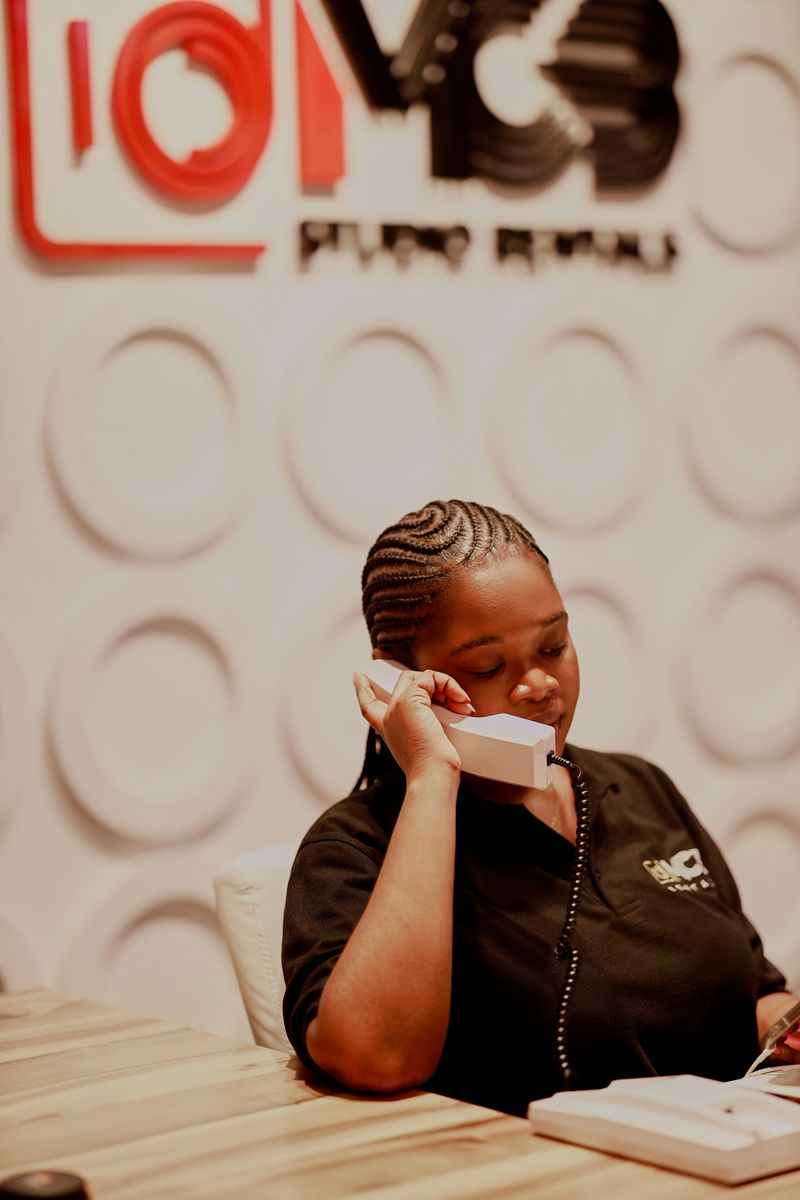
What is the difference between an AI receptionist and an answering service?
An answering service is a team of live people who pick up your overflow or after-hours calls, take messages and sometimes book appointments. An AI receptionist is software that answers in a natural voice, asks your questions and books straight into your calendar. One sells human minutes, the other sells software usage.
Both fix the same leak. Calls that ring out turn into work for somebody else. In a 2016 Moneypenny report built on a survey of 300 micro businesses plus call data, 69% of callers who reached voicemail hung up without leaving a message. Moneypenny sells call answering, so weigh that, but if you've ever scrolled through your own missed calls you've seen the same pattern.
How much does an answering service cost compared to an AI receptionist?
A live answering service usually costs several dollars per minute of talk time. Ruby's published plans run from $250 a month for 50 minutes to $1,725 a month for 500 minutes, about $3.45 to $5 a minute. AI voice agents cost cents per minute in usage, plus a platform fee and setup.
Take a business that handles 300 minutes of calls a month. On Ruby's current plans, the 200-minute plan at $720 won't cover it, so you'd be on the 500-minute plan at $1,725. With an AI receptionist, Retell AI lists $0.07 to $0.31 per minute for voice agents on pay-as-you-go, so 300 minutes of usage comes to roughly $21 to $93 before the platform fee and whoever builds and maintains it.
The usage bill is small. The cost of AI shows up in setup and upkeep: writing the script, connecting your calendar, and reading transcripts so the agent gets better. I lay out full monthly numbers and the break-even math in what AI voice agents cost and whether they're worth it.
Which one covers more hours and more calls?
Both can cover 24 hours a day. Ruby's pricing page advertises 24/7 live answering, including nights, weekends and holidays. The difference shows up in volume. Most AI voice platforms can take several calls at the same moment at the same per-minute rate, while a human service bills every extra minute, so a busy month means a bigger invoice.
Coverage also means what happens after the call. An answering service that takes a message still leaves you calling the lead back, and timing matters. In a Harvard Business Review audit of 2,241 US companies, firms that contacted a lead within an hour were nearly seven times as likely to qualify it as firms that waited an hour longer (study figures). An AI receptionist that books during the call removes the callback entirely.
Which one gives callers a better experience?
For emotional, complicated or high-stakes calls, a trained human still gives the better experience. For routine calls about booking, hours, price ranges and directions, a well-built AI receptionist is fast and consistent, and it never has an off day. Caller trust in AI is the gap you have to design around.
Customers are wary. A Gartner survey of 5,728 customers found 64% would prefer companies didn't use AI for customer service, and 53% would consider switching to a competitor over it. Their top concern was that AI would make it harder to reach a person. So build the AI receptionist with an obvious exit: offer a transfer, take a callback request, and have it say it's an AI assistant if someone asks.
Answering services have a quality gap of their own. The person picking up is covering dozens of businesses and reading from a card about yours. They can take a clean message, but they usually can't answer a detailed question about your services or quote a price range. An AI receptionist can be loaded with your full FAQ, your service area and your pricing rules, and it gives the same answer at 2 p.m. and 2 a.m.
How do an AI receptionist and an answering service compare side by side?
An AI receptionist is cheaper per minute, handles many calls at once and books in real time, while an answering service is better with upset or complex callers and needs almost no setup from you. The table below compares them on cost, coverage, booking, call quality and setup.
| Factor | Answering service (live people) | AI receptionist |
|---|---|---|
| Pricing model | Monthly minute bundles, overage for extra minutes | Per-minute usage plus a platform or setup fee |
| Example: 300 minutes a month | $1,725 on Ruby's 500-minute plan | About $21 to $93 in usage at Retell's listed rates, plus platform and setup |
| Hours | 24/7 with many providers | 24/7 |
| Several calls at once | Depends on staffing | Yes, on most platforms |
| Books into your calendar | Some providers, varies by plan | Yes, when connected to your live calendar |
| Asks qualifying questions | Basic intake script | Your full question list, in order, every time |
| Upset or complex callers | Stronger | Weaker, should hand off to a person |
| Knowledge of your business | A script card | Whatever you load into it |
| Setup effort for you | Low | Medium: script, calendar, testing |
| Records in your CRM | Messages by email or app | Full transcript and answers saved to the contact |
When does an answering service win?
An answering service wins when your calls are emotional, complicated or legally sensitive, when your callers expect a person, and when your volume is low enough that a small minute bundle covers it. Injury law intake, therapy practices and funeral homes are good examples of businesses that should keep a human on the line.
- Callers are often distressed and need empathy more than speed.
- Most calls are one-off questions rather than bookings.
- You get fewer than about 50 to 100 minutes of calls a month and don't want to manage any setup.
- Your callers skew older and you've already heard complaints about automated phone systems.
When does an AI receptionist win?
An AI receptionist wins when you get a steady flow of routine calls, when most calls should end in a booked appointment, when after-hours calls go to voicemail today, and when ads create call spikes. Home services, med spas, dental offices and coaches running lead ads usually fit this profile.
The ad spike is the one I see most. I've been running ads since 2013, and when an ad starts working, calls arrive in bursts. A human service bills every one of those minutes, and your own team can't call them all back in the first hour. An AI receptionist picks up every one, asks the same qualifying questions, and books the good ones while the lead is still interested. If you want to see what your unanswered calls are costing, run them through our missed call calculator.
Can you use an AI receptionist and a human together?
Yes, and for most small businesses the mix works best. Let the AI receptionist answer every call first, handle and book the routine ones, then transfer or flag anything urgent, upset or complex to a person on your team or a live service. You pay human rates only for the calls that need a human.
Set the handoff rules in writing: which words trigger a transfer (refund, lawyer, emergency, cancel), who gets the alert, and how fast that person promises to call back. Then check a week of transcripts to see whether the rules fire when they should.
KenjiAI's Voice AI agents work this way. They answer inbound calls, ask your qualifying questions, book into your calendar inside the CRM, text the confirmation, and alert a person on your team when a call needs one. See how our voice agents handle calls.
Before you choose, pull last month's call log. Count the calls that went to voicemail, the ones after 6 p.m. or on weekends, and how many were people trying to book. If most were routine booking calls, test an AI receptionist on after-hours calls first and compare booked appointments after 30 days.